
(or Welcome Back)
It's been a long time and instead of burying myself under a mountain of platitudes or attempts to recreate the two years of 'reading past," I shall forge ahead instead.
You've been forewarned!
~~J

 (Flannery's typewriter at Andalusia, March 2010)
 PROGRESS:
Novels Read: Wise Blood, and The Violent Bear It Away
From her MFA Thesis:
"The Crop" **
"The Turkey"
From A Good Man is Hard to Find:
"A Stroke of Good Fortune" **
"A Good Man is Hard to Find"
"A Late Encounter with the Enemy" **
"The Life You Save May be Your Own"
"The River"
"A Circle in the Fire"
"The Displaced Person"
"A Temple of the Holy Ghost" **
"The Artificial Nigger"
"Good Country People"
From Everything That Rises Must Converge:
"Everything That Rises Must Converge"
"Greenleaf" **
"A View of the Woods"
"The Comforts of Home" **
"The Lame Shall Enter First"
"The Enduring Chill"
"Parker's Back" **
"Revelation"
"Judgement Day"
In The Complete Stories:
"The Patridge Family" **
"Why Do the Heathen Rage?" **
Revised for her Novels:(I haven't read these yet)
"The Peeler" (WB)
"The Heart of the Park" (WB)
"Enoch and the Gorilla" (WB)
"You Can't be Any Poorer Than Dead" (TVBA)
...So that is that. Maybe I will "revisit" the stories I really loved...but for now they only get **.
~~J

 (at Andalusia, March 2010)
 (Sylvia Plath)
 I first became aware of this collection because of the film with the same name. Completely enamored by Liv Tyler at the time (I think this was her second role), I wanted to read where the movie came from....it was 1997.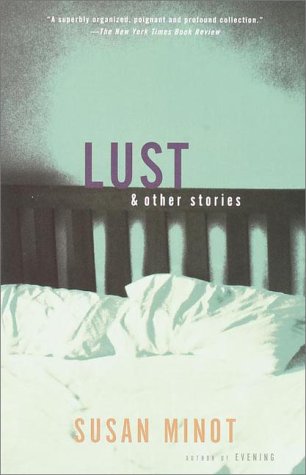


(room in an antique dollhouse)
Originally published in The Century Magazine (1928), this one is just under 1,500 words and is the shortest "short" story by F. Scott I have read thus far. It might be his shortest even, I'd have to do research to find out if that is true.
Either way, it is charming and has nothing to do with love-lost, but instead the imagination of a little girl and the relationship between father and daughter take center stage. None of the characters are named even, so it's enchanting.
An automobile stops and out pops a lady, who disappears into a Cabinet-Maker's shop to conduct business. Revealed through the story is the reason she is there--and F. Scott even puts the key sentences in French.
(I had to look these up, and it didn't bother me one bit)
A gift for the little girl is being bargained for--and it can't cost more than "Twenty dollars." Father and daughter stay outside and construct a magical story together, while watching the people moving about the neighborhood:
“Who is the lady?”
“She’s a Witch, a friend of the Ogre’s.”
The shutter blew closed with a bang and then slowly opened again.
“That’s done by the good and bad fairies,” the man explained. “They’re invisible, but the bad fairies want to close the shutter so nobody can see in and the good ones want to open it.”
“The good fairies are winning now.”
“Yes.” He looked at the little girl. “You’re my good fairy.”
Finally the lady comes out and the Father finds out that the gift costs more than they hoped, at twenty-five dollars--but apparently it will be made anyway.
As quickly as it began, it is over. Short and very sweet. Refreshing.
~~J
Welcome to 1931. Or at least that's when this particular story was first published in the Saturday Evening Post. I found the text in one of the used literature anthologies I seem to grab whenever they are within reach.
"A New Leaf" is in a chapter dedicated to "Evaluating Fiction." The student is instructed to pay close attention to things like plot, structure, characterization, theme, point of view, symbols, allegories, fantasy, humor, and irony (did you catch all that?).
There are even eight questions that follow to direct thoughts. Good stuff. Nevertheless, I shall ignore all the rules and opine on the story as I normally do.
By far, my favorite section of the story occurred first--opening scene as Julia spies Dick Ragland, as he briefly stops to speak to the man she is having dinner with:
She sat there, a well-behaved women of twenty-one, and discreetly trembled....
"He's without doubt the handsomest man I ever saw in my life."
"Yes, he's handsome," he agreed without enthusiasm.
"Handsome! He's an archangel, he's a mountain lion, he's something to eat. Just why didn't you introduce him?"
If I had a dollar for every time...okay. I don't think those words have ever left my mouth, but I am dying to use the line as soon as possible.
But, of course, Dick is trouble. He's not well-received. He's a drunk. Which is all the more reason for Julia to fall madly and deeply, despite the fact that he shows up both drunk and hungover for the first planned meeting.
The rest is predictable. Well, maybe not exactly--but there will be disappoint and it is rather anti-climactic, even though F. Scott throws in a bit of mystery when we hear of the final action through another character.
"Better let it all alone in the depths of her heart and the depths of the sea." Aye, aye captain.
~~J
 (original artwork from the Saturday Evening Post)
Since it was the first story in my "collection" you'd think I would've started there, right? No. I'm an odd girl that way. But finally I went with the first story...so presented first probably because it was his first piece to appear in the Saturday Evening Post (February 1920).
It is obvious that F. Scott was only 24 when this was written. There is a sense of hopefulness and big dreams. It all crashes, of course--in the typical Fitzgerald way. But I love that way.
We are introduced to the "infant prodigy," Horace Tarbox and his extreme brain and deep thoughts. He has entered college at the tender age of 13 and cares more about his academic pursuits than the world around him. (HEY! What's wrong with that??)
As a joke, his cousin sends an actress to his room one night. Oh no! The trouble begins! He hears the rapping at his door "--three seconds leaked by--the rap sounded."
(The Raven anyone? THE RAVEN? All I could think about was Poe here.)
Horace is almost 18 while the very mature Marcia Meadow is 19. She is bold and just sits right down in one of his reading chairs: "Horace stared at her dazedly. The momentary suspicion came to him that she existed there only as a phantom of his imagination."
She grabs his attention, by her boldness and ability to spout off dramatic lines from plays. Eventually he agrees to attend one of her plays--after my favorite exchange in the story:
"No," interrupted Marcia emphatically. "And you're a sweet boy. Come here and kiss me."
Horace stopped quickly in front of her.
"Why do you want me to kiss you?" he asked intently. "Do you just go round kissing people?"
"Why, yes," admitted Marcia, unruffled. "'At's all life is. Just going round kissing people."
Wisdom, again, in just a snippet of dialogue. F. Scott gets me every time, with every single moment he captures. Of course--there will be kissing, there will even be a marriage between the unlikely couple and a complete role reversal by the end. And even one of my favorite words--syncopated--makes its appearance.
"Poor gauzy souls trying to express ourselves in something tangible. Marcia with her written book; I with my unwritten ones. Trying to choose our mediums and then taking what we get--and being glad."
Never answer the door when someone knocks--you never know who it might be...you never know what they may take from you.
~~J

Original illustration by Arthur William Brown for Metropolitan Magazine
I decided to stay in a seasonal realm and found myself reading (and enjoying) another Gatsby cluster story. "Winter Dreams" first appeared in Metropolitan Magazine in December 1922. and was later put in a collection.
F. Scott was working on his third novel at the time and eliminated some of the text in the magazine and later used it in The Great Gatsby. Little did I know while reading that "Winter Dreams" seems to be his most discussed short story--at least of the ones I have read thus far.
"In the fall when the days became crisp and gray, and the long Minnesota winter shut down like the white lid of a box..." We follow Dexter Green, winter dreamer and the finest golf caddy (only for extra pocket money) from age 14 to 32.
He has big dreams, as a golf champion commanding over imaginary audiences as he defeats Mr. T. A. Hedrick a hundred times--each different, but important. Typical 14-year-old boy stuff, I suppose.
Until he means Miss Judy Jones one day over the summer while he is caddying at Sherry Island Golf Club in New Jersey...bam! She ruins him, even though she is only eleven-- "beautifully ugly" but with a spark and "lips twisted down at the corners when she smiled..."
After observing and conversing with Miss Jones and her nurse, he quits. Suddenly because "he had received a strong emotional shock, and his perturbation required a violent and immediate outlet."
Part two takes place nine years later, and Dexter has gone to a university in the East (leaving behind the Midwest) and has become a successful business man (laundry business, washing woollen golf-stockings without shrinking them) and is invited to play at the Sherry Island Golf Club.
Guess who is there and is "arrestingly beautiful" and always looking as if she wants to be kissed?
Now we get more beautiful F. Scott prose:
"Later in the afternoon the sun went down with a riotous swirl of gold and varying blues and scarlets, and left the dry, rustling night of Western summer. Dexter watched from the veranda of the Golf Club, watched the even overlap of the waters in the little wind, silver molasses under the harvest-moon. Then the moon held a finger to her lips and the lake became a clear pool, pale and quiet..."
Dexter happens to come across Miss Judy Jones at the lake, and of course, he's already in love with her...just as every other man is..."His heart turned over like a the fly-wheel of the boat, and, for the second time, her casual whim gave a new direction to his life."
This is the point where I'm internally screaming at Dexter--NO! She's going to break your heart! Don't do it, don't do it....but he doesn't listen. Poor Dexter.
Parts 3 and 4 we watch the intoxicating Judy work her spell and ruin a man. That's how women are, after all. "When the scarlet corners of her lips curved down, it was less a smile than an invitation to a kiss." Man? Many men, as the snobbish daughter of a rich man--she can do whatever she pleases.
"She was not a girl who could be 'won' in the kinetic sense--she was proof against cleverness, she was proof against charm;..." I think F. Scott is talking about me here, but maybe not.
Dexter finally realizes that he could not have Judy Jones (finally!)--"Then he said to himself that he loved her, and after a while he fell asleep." This is how these things go. He becomes engaged to another woman even.
But damn her, if that Judy Jones doesn't come back into the picture. Poor Irene doesn't stand a chance! Judy comes back from vacation and actually confronts Dexter and proposes to HIM:
"I'd like to marry you if you'll have me, Dexter. I suppose you think I'm not worth having..."
A million phrases of anger, pride, passion, hatred, tenderness fought on his lips. Then a perfect wave of emotion washed over him, carrying off with it a sediment of wisdom, of convention, of doubt, of honor. This was his girl who was speaking, his own, his beautiful, his pride.
"Won't you come in?" He heard her draw in her breath sharply.
Waiting.
"All right," his voice was trembling, "I'll come in."
We could end it right here. But we go on and we fast forward seven years to see what has become of Dexter and Judy. Poor Irene and the rest of the Sherry Island Golf Club crew. I'll stop right here and let you find out for yourself.
-----
I do love a good moment of tension. A moment that is written so clearly and with so much...HONESTY that it drips from the pages and wells up in my heart. Moments. F. Scott is so good with his moments between lovers or almost-lovers or will-never-be lovers.
I always get the question, "What do you write?"
I say, "short fiction." I get a look of confusion. "But like what?"
And then I come up with, "Moments. I write moments between people."
More confused looks. F. Scott understands.
~~J
Note: I had a good time noticing repeated words whilst reading (not complaining, only noticing) especially ecstasy and spasmodically.

 (Jonquils, not Daisies...but here we have his love of yellow flowers, oddly enough there is no mention of alcohol in this story...)


